Tag: spirituality

  • Silence

    Silence

    Almost all religious and faith traditions, as well as many non-religious cultures, celebrate silence and take silence as their spiritual foundation. From monastic vows, to meditative contemplation, from mindfulness practices, to retreats in nature, the quietude is seen as invaluable in focusing our attention on what is deeply within, but also what is beyond ourselves, in preparation for prayers, and in anticipation of divine wisdom.

    In our current world, silence has become increasingly challenging especially where there are relentless noises and soundbites coming from all sources and media. Even if we take courage and plunge into silence, it is not always easy to sustain it. Silence requires nurturing as an awareness, and needs cultivating as an aspect of our being.

    Silence is more than the absence of noise, words, or sounds, instead, it is a complete (inner) quietude and stillness that inhabit openness, reflectiveness and love. Indeed, in silence, we become truly open and tune in with what is being availed to us, which would otherwise be drowned in the constant influx and agitation. In being open, we begin to ground our self in the here and now, and in being itself. By dwelling in our being, we can then reflect and contemplate on our relationship with our experiences, thoughts and feelings directed both inwardly at our self, and outwardly towards others and the world. By encouraging such attunement and attention, silence is where love resides deeply within us, in our encounter with others, and in our being-with all things in nature and the transcendent.

    Silence gives rise to what cannot be said or found expressible, and to what is sensed, experienced and noticed. The creative nature of our ethical life is thus brought forward in our collective silence.

    Silence is rich in its forms and contents. Through silence, and in silence, the threads of our thinking, doing, living and praying are interwoven into the wholeness of being.

    More importantly, silence is not isolation, nor seclusion, but on the contrary, silence is intensely relational, and hence profoundly communal. Collective silence invites solidarity, inclusivity, harmony and mutual presence.


    In practice:

    • Silence is perceived as a mystery – we do not seek any explanation to its power and magic; nor do we privilege any particular kind of silence. All paths to silence are invited and welcome, allowing diverse expressions of our shared realities to be articulated.
    • Silence is appreciated as a common value – we do not treat silence as a means to an end, but instead, we recognise the intrinsically valuable nature of silence which is meaningful and worthwhile in itself.
    • Silence is embraced as a relational bond – it draws people of all backgrounds together in a common sacred space or in communing.
    • Silence is experienced as mutual presence – one of the ways of being love and doing love, of being peace and making peace, together.
    • Silence is carried forward as an aspiration – it is in silence that we explore our mutual moral growth through spiritual formation and transformation.
    • Silence is inhabited as an intentional commitment – it is in such dedication that we offer and receive the enriching and generative gift of care for and from each other.
    • Silence is the universe itself, and has its architecture, archaeology, memory, texture, and colour.

    Sometimes, silence is filled with guilt, shame and humiliation; or self-protection, an escape and hideout from hurt; or suppression and subjugation. Other times, silence is resistance, resurgence, response, but also self-determination, and self-dignity.

    We are privileged to practise silence as a connection with each other, with other beings, and with the higher forces in the universe.

    Hence we intentionally make available such spaces for collective or gathered silence.

    Silence is not a thing we do, but a way we are.

  • Thomas Hüebl — Love, Collective Trauma and the Healing of the Past

    Thomas Hüebl — Love, Collective Trauma and the Healing of the Past


    A Narrative of Love conversation hosted by Dr Scherto Gill

    ▶ Watch this conversation on YouTube


    Thomas Hüebl is a renowned teacher, author and international facilitator whose lifelong work integrates the core insights of the great wisdom traditions and mysticism with the discoveries of modern science. For nearly two decades he has taught and facilitated collective healing programmes worldwide, and is the author of Healing Collective Trauma: A Process for Integrating Our Intergenerational and Cultural Wounds.

    The conversation opens with the question of how Hüebl found his way through the mystical traditions — Daoism, Kabbalah, Tibetan Buddhism — and his answer centres on inner resonance rather than intellectual choice. At the core of each tradition, beneath its cultural clothing, he found the same essential wisdom. His four-year meditation retreat deepened this sense of inner guidance, and it was out of that practice that his distinctive understanding of love began to emerge.

    On love: specificity and presence

    For Hüebl, love comes with a few essential ingredients: space, feeling and care. To love someone is first to make space for them inside oneself — not just to perceive them as an object out there, but to let oneself be genuinely informed and shaped by them. This relational quality he calls resonance, and he offers a striking formulation: specificity is love. The most universal force in the universe — what the mystical traditions understand as the source of all being — is always expressed in the most specific, most particular, most present encounter. Love that is not specific is not yet fully love.

    He draws on the scene at Mount Sinai in the Hebrew Bible, where God speaks to all Israel and yet each person reports that the divine voice spoke to them personally. The universal and the specific are not two. And care — genuine attention to the particular other — is the relational expression of this truth in everyday life.

    On collective trauma: the normalisation of numbness

    The deeper movement of the conversation turns to collective trauma — the hidden inheritance that shapes human societies without being recognised. Hüebl grew up in post-war Vienna, surrounded by the aftermath of World War Two, and as a child sensed a pervasive numbness in the social fabric without knowing what it was. Nobody handed out a manual for a traumatised world. He simply experienced it as how things were.

    This normalisation, he argues, is one of trauma’s most dangerous features. Trauma freezes. It doesn’t adapt or develop. And because we cannot see what we are absent from — because absence, by definition, doesn’t arise in consciousness — we mistake the symptoms of collective trauma for the normal structures of life. Our collective fog of indifference, our inability to respond adequately to racism, to climate change, to the suffering of others — these are not moral failings in the ordinary sense. They are the signature of unintegrated history operating through us.

    The nervous system, Hüebl insists, is not merely personal. It carries ancestral and collective dimensions: the personal, ancestral and collective are an interdependent system, not separate entities. When working with groups in Germany, he began to witness how group coherence — mutual listening, relational safety, enough trust — induces a kind of collective detox: stored trauma information begins to surface and can, with care, be integrated. Presence, relation and healing are profoundly connected.

    On responsibility without guilt

    Scherto raises the question of transatlantic slavery and its enduring after-effects, and Hüebl offers a distinction that clarifies without minimising: you are not responsible for the crimes of your grandparents, but you are responsible for the after-effects you create by turning away from them. Responsibility means the ability to respond — and if you remain unconscious of how ancestral trauma operates through you, you become its unwitting conduit, re-enacting its patterns through indifference, through participation in oppressive systems you cannot even see. The structural violence is not only out there. It is also internally wired in every citizen of a society shaped by that history.

    This is not a counsel of guilt, but of inquiry: the painful, necessary recognition that none of us stands cleanly outside the systems we have inherited.

    On time, healing and the future

    The conversation closes on one of Hüebl’s most subtle ideas: retro-causality, or the possibility that healing in the present reaches back and touches the past. He distinguishes between integrated history — experience that has been processed and woven into the living fabric of a person or culture — and split history: trauma that has not yet been integrated, information stored in the collective nervous system but inaccessible, dissociated, turned off.

    When healing work integrates a split past, something shifts not only in the present but retroactively. I am the future of my grandparents, he says. How my healing work today affects the moment of their trauma is a question worth holding open.

    He closes with the vision that animates his work: that we cannot build a new world as old versions of ourselves. The update of humanity is not optional — it is what the complexity of our global challenges requires. And it begins with the capacity to be present: to let the past find a home in the now, and to let the future be born from the quality of attention we bring to this moment.


    This is one of eleven conversations in the A Narrative of Love series, hosted by Dr Scherto Gill in preparation for the 5th Spirit of Humanity Forum, June 2021. The series was sponsored by the Pureland Foundation and the Guerrand-Hermès Foundation for Peace (GHFP).

  • Dr Vandana Shiva — Seeds of Love

    Dr Vandana Shiva — Seeds of Love


    A Narrative of Love conversation hosted by Dr Scherto Gill

    ▶ Watch this conversation on YouTube


    Dr Vandana Shiva opens with a striking claim: agriculture is an act of love. From her earliest experience of her father’s nurturing care to her lifetime of work defending seeds, soils and the rights of farming communities, she traces a single thread — that love is not sentiment but relationship, not abstraction but practice rooted in the living world.

    She articulates a vision of love as compassion, as the recognition of interconnectedness that makes exploitation impossible: when there is unconditional trust, there is unconditional love. The problems humanity faces — ecological destruction, corporate monoculture, the erosion of commons — arise, she argues, from blindness, denial and a fear of love; from a manipulated world of domination and control that severs the thread of relationship between human beings and the living systems that sustain them.

    Vandana Shiva calls for spiritually inspired activism that does not mimic the aggression of oppressive systems: non-violent power grows, she insists, while violent systems, being ultimately loveless, cannot endure. She describes economies of love — drawing on Aristotle’s sense of economy as the art of living well — in which the only true measure of wealth is right relationship, care and the recovery of the commons.

    And she closes with a seed: a simple, radical act of love available to anyone. If we can save one seed, she says, it will hold within it the imagination of love.


    This is one of eleven conversations in the A Narrative of Love series, hosted by Dr Scherto Gill in preparation for the 5th Spirit of Humanity Forum, June 2021. The series was sponsored by the Pureland Foundation and the Guerrand-Hermès Foundation for Peace (GHFP).

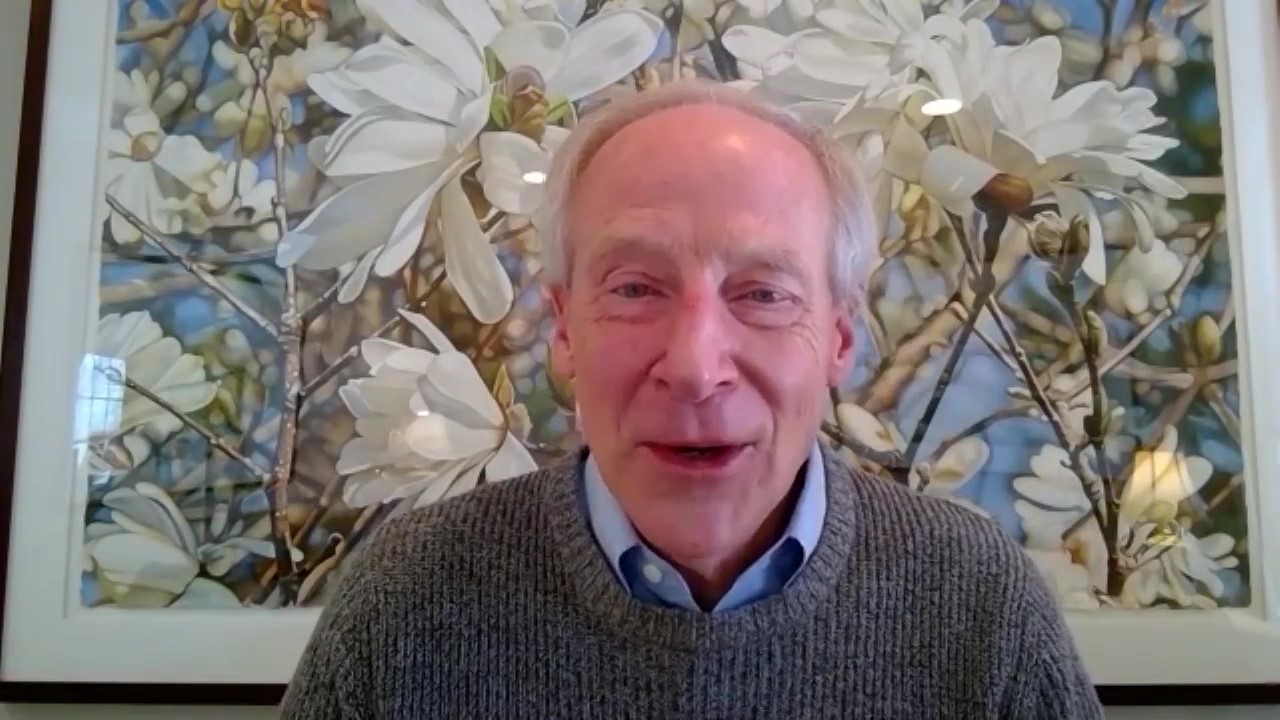
  • Bob Boisture — Love, Justice and the Flourishing of All

    Bob Boisture — Love, Justice and the Flourishing of All


    A Narrative of Love conversation hosted by Dr Scherto Gill

    ▶ Watch this conversation on YouTube


    Bob Boisture brings the Fetzer Institute’s foundational commitment to love and forgiveness into direct conversation with the questions of governance, democracy and social transformation. He opens by sharing a three-fold definition of love that has shaped his work: love as a spiritual foundation, love as a habit of the heart through which another’s well-being becomes our own, and love as justice in action — a phrase he encounters in Scherto’s framing and immediately embraces.

    He reflects on his own journey as a lawyer who chose non-profit work in order to bring love into institutions — and on the uncomfortable conclusion that follows when you look at every social institution through a lens of love: every system we have is in need of transformation. The conversation addresses the racial reckoning in the United States directly, and Fetzer’s conviction that organisations cannot make a constructive contribution to healing in the outside world until they have done their own inner work first.

    Boisture draws on Martin Luther King’s insight that love without power is anaemic, exploring how the Fetzer approach seeks to mainstream inner work within civil society — building communities of genuine belonging, not merely inclusion within norms developed without those communities’ participation. The beloved community King envisioned, he suggests, is not an aspiration but a practice: an enactment of love through sustained dialogue, listening and the patient work of healing the heart of democracy.


    This is one of eleven conversations in the A Narrative of Love series, hosted by Dr Scherto Gill in preparation for the 5th Spirit of Humanity Forum, June 2021. The series was sponsored by the Pureland Foundation and the Guerrand-Hermès Foundation for Peace (GHFP).

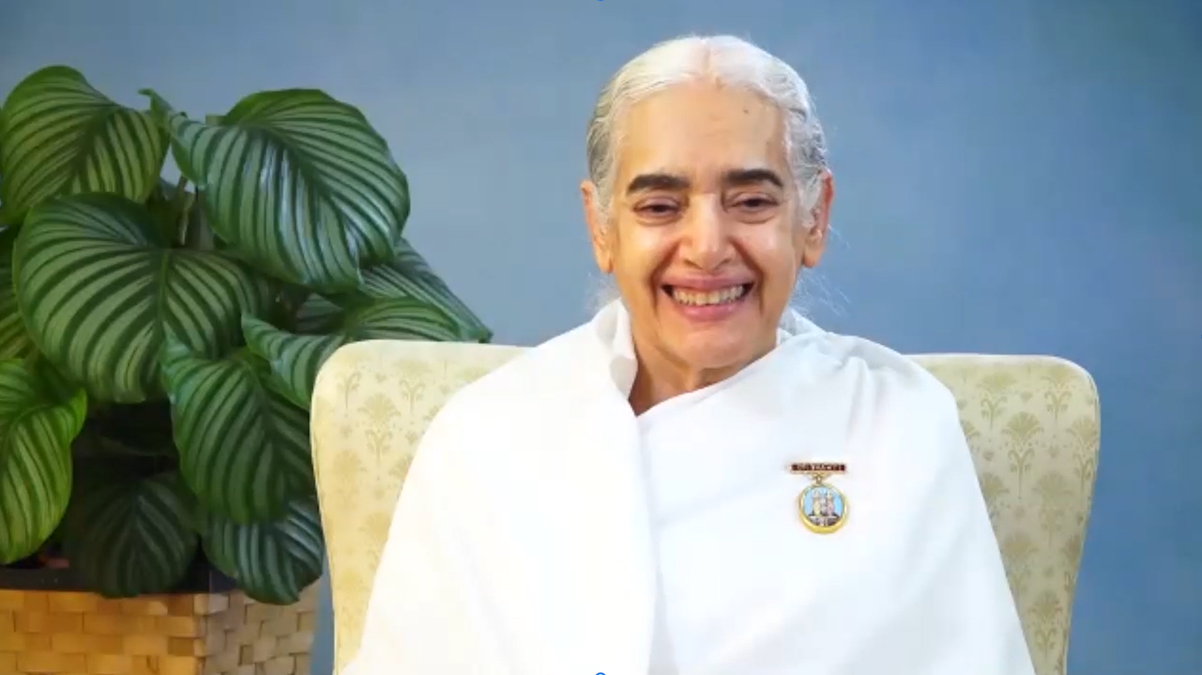
  • BK Sister Jayanti — Love, Spirituality and Inner Transformation

    BK Sister Jayanti — Love, Spirituality and Inner Transformation


    A Narrative of Love conversation hosted by Dr Scherto Gill

    ▶ Watch this conversation on YouTube


    Sister Jayanti Kirpalani explores how love, understood as an inner spiritual reality, might be integrated into everyday life, politics and education. She invites a shift in perspective: it is not the external structures of the world that are ultimately driving events, but the quality of inner being that each of us brings to our lives and work. When that inner being is grounded in love, it changes the atmosphere of any room, negotiation or institution — even when nothing is said directly.

    The conversation moves through questions of how we know when we are in that spiritual flow; how to reconcile the imperative to serve with genuine self-care; how spirituality relates to structural change; and what promise inner transformation holds for the world’s most urgent crises. Sister Jayanti draws on decades of practice in the Brahma Kumaris tradition and her experience working alongside political leaders and at the United Nations, where she has witnessed how even the hardest negotiations shift when individuals bring qualities of stillness and presence.

    Values, she suggests, are caught rather than taught — lived rather than transmitted through instruction. The conversation closes with a guided reflection on love.


    This is one of eleven conversations in the A Narrative of Love series, hosted by Dr Scherto Gill in preparation for the 5th Spirit of Humanity Forum, June 2021. The series was sponsored by the Pureland Foundation and the Guerrand-Hermès Foundation for Peace (GHFP).