Author: SchertoGill

  • Lest We Lose Love

    Lest We Lose Love

    Rediscovering the Core of Western Culture

    Scherto R. Gill

    Published by Anthem Press — http://www.anthempress.com

    ISBN 978-1-83998-760-3


    Endorsements

    “Professor Gill addresses the global crisis of hope by combining the rich wellsprings of historic philosophy with today’s wavefront of systems and complexity science. She gives new life to the immortal concept of love, impoverished by excessive nationalism and enfeebled by romanticism. Her presentation of love as the doing of relationships, of caring and valuing people for themselves, is an inspiring foundation for living well and finding meaning today and tomorrow.” — John, Lord Alderdice FRCPsych, Senior Research Fellow, Harris Manchester College, University of Oxford.

    “Lest We Lose Love is a passionately informed and deeply layered work, which succeeds in both excavating and rewilding the landscape of love. Illuminating in its content and meticulously researched, this book reaches the core of what it means to be human and is a profound act of service. And as well as vitalising I’m reminded on every page of William Blake’s words: ‘We are put on earth that we may learn to bear the beam of love.’” — Marina Cantacuzino MBE, Journalist, author, broadcaster and founder of The Forgiveness Project.

    “Drawing on the rich resources of the Western tradition, this important book gives us a powerful framework for thinking about the fundamental connection between love and human flourishing. In a world in which we are ever more powerful and ever less able to use that power for the common good, Scherto invites us to consider the possibility that love may be the only way forward.” — Robert Boisture, President, The Fetzer Institute.

    “Fortunately for all of us, Scherto Gill’s careful investigation into love in Western culture brings to the fore a matter that has been hidden away — the matter of love. We must all read it.” — David Cadman, Harmony Professor of Practice, University of Wales Trinity Saint David.


    About the Book

    Few are aware that since antiquity there has always been the philosophy of love at the core of Western culture. It articulates what makes life meaningful and worthwhile, and how we can live a good life together through an ethic of love. This book fills this significant gap, not only reconnecting the reader with such important wisdom, and more crucially, also reorienting our socioeconomic institutions and collective actions towards more loving and caring, and more concerned with the qualities of our lived experiences. By re(dis)covering the gifts of love, we may challenge the existing systemic dehumanisation and draw from knowledge and understanding already present in our culture. This is timely because the global crises we are facing are catastrophic, especially when it comes to climate change. Therefore we must respond from a place of love rather than fear. Whether it is reducing the use of fossil fuels, lowering greenhouse emissions, choosing the right food to eat or advocating for structural transformation, our concerted endeavours start with an appropriate appreciation of the nature of our well-being which includes the planet’s well-ness. This book highlights a clear pathway forward: to ensure collective healing and co-flourishing with nature, we must practise the art of loving.


    About the Author

    Scherto Gill is Professor of Research and Director of Global Humanity for Peace Institute, University of Wales Trinity St David. She is also Senior Fellow at the Guerrand-Hermès Foundation for Peace (GHFP) and a Life Fellow of the Royal Society of the Arts (FRSA). Professor Gill directs the UNESCO initiative on Collective Healing, Social Justice and Global Well-Being and chairs the G20 Interfaith Forum’s Education Working Group. Professor Gill’s research interests focus on understanding positive peace, human well-being, collective healing and global flourishing as dynamic processes, and she has published extensively on related subjects.


    280 pages. 5.50 x 8.50 in / 216 mm x 140 mm. Black & White. Crème paper.

  • Silence

    Silence

    Almost all religious and faith traditions, as well as many non-religious cultures, celebrate silence and take silence as their spiritual foundation. From monastic vows, to meditative contemplation, from mindfulness practices, to retreats in nature, the quietude is seen as invaluable in focusing our attention on what is deeply within, but also what is beyond ourselves, in preparation for prayers, and in anticipation of divine wisdom.

    In our current world, silence has become increasingly challenging especially where there are relentless noises and soundbites coming from all sources and media. Even if we take courage and plunge into silence, it is not always easy to sustain it. Silence requires nurturing as an awareness, and needs cultivating as an aspect of our being.

    Silence is more than the absence of noise, words, or sounds, instead, it is a complete (inner) quietude and stillness that inhabit openness, reflectiveness and love. Indeed, in silence, we become truly open and tune in with what is being availed to us, which would otherwise be drowned in the constant influx and agitation. In being open, we begin to ground our self in the here and now, and in being itself. By dwelling in our being, we can then reflect and contemplate on our relationship with our experiences, thoughts and feelings directed both inwardly at our self, and outwardly towards others and the world. By encouraging such attunement and attention, silence is where love resides deeply within us, in our encounter with others, and in our being-with all things in nature and the transcendent.

    Silence gives rise to what cannot be said or found expressible, and to what is sensed, experienced and noticed. The creative nature of our ethical life is thus brought forward in our collective silence.

    Silence is rich in its forms and contents. Through silence, and in silence, the threads of our thinking, doing, living and praying are interwoven into the wholeness of being.

    More importantly, silence is not isolation, nor seclusion, but on the contrary, silence is intensely relational, and hence profoundly communal. Collective silence invites solidarity, inclusivity, harmony and mutual presence.


    In practice:

    • Silence is perceived as a mystery – we do not seek any explanation to its power and magic; nor do we privilege any particular kind of silence. All paths to silence are invited and welcome, allowing diverse expressions of our shared realities to be articulated.
    • Silence is appreciated as a common value – we do not treat silence as a means to an end, but instead, we recognise the intrinsically valuable nature of silence which is meaningful and worthwhile in itself.
    • Silence is embraced as a relational bond – it draws people of all backgrounds together in a common sacred space or in communing.
    • Silence is experienced as mutual presence – one of the ways of being love and doing love, of being peace and making peace, together.
    • Silence is carried forward as an aspiration – it is in silence that we explore our mutual moral growth through spiritual formation and transformation.
    • Silence is inhabited as an intentional commitment – it is in such dedication that we offer and receive the enriching and generative gift of care for and from each other.
    • Silence is the universe itself, and has its architecture, archaeology, memory, texture, and colour.

    Sometimes, silence is filled with guilt, shame and humiliation; or self-protection, an escape and hideout from hurt; or suppression and subjugation. Other times, silence is resistance, resurgence, response, but also self-determination, and self-dignity.

    We are privileged to practise silence as a connection with each other, with other beings, and with the higher forces in the universe.

    Hence we intentionally make available such spaces for collective or gathered silence.

    Silence is not a thing we do, but a way we are.

  • Thomas Hüebl — Love, Collective Trauma and the Healing of the Past

    Thomas Hüebl — Love, Collective Trauma and the Healing of the Past


    A Narrative of Love conversation hosted by Dr Scherto Gill

    ▶ Watch this conversation on YouTube


    Thomas Hüebl is a renowned teacher, author and international facilitator whose lifelong work integrates the core insights of the great wisdom traditions and mysticism with the discoveries of modern science. For nearly two decades he has taught and facilitated collective healing programmes worldwide, and is the author of Healing Collective Trauma: A Process for Integrating Our Intergenerational and Cultural Wounds.

    The conversation opens with the question of how Hüebl found his way through the mystical traditions — Daoism, Kabbalah, Tibetan Buddhism — and his answer centres on inner resonance rather than intellectual choice. At the core of each tradition, beneath its cultural clothing, he found the same essential wisdom. His four-year meditation retreat deepened this sense of inner guidance, and it was out of that practice that his distinctive understanding of love began to emerge.

    On love: specificity and presence

    For Hüebl, love comes with a few essential ingredients: space, feeling and care. To love someone is first to make space for them inside oneself — not just to perceive them as an object out there, but to let oneself be genuinely informed and shaped by them. This relational quality he calls resonance, and he offers a striking formulation: specificity is love. The most universal force in the universe — what the mystical traditions understand as the source of all being — is always expressed in the most specific, most particular, most present encounter. Love that is not specific is not yet fully love.

    He draws on the scene at Mount Sinai in the Hebrew Bible, where God speaks to all Israel and yet each person reports that the divine voice spoke to them personally. The universal and the specific are not two. And care — genuine attention to the particular other — is the relational expression of this truth in everyday life.

    On collective trauma: the normalisation of numbness

    The deeper movement of the conversation turns to collective trauma — the hidden inheritance that shapes human societies without being recognised. Hüebl grew up in post-war Vienna, surrounded by the aftermath of World War Two, and as a child sensed a pervasive numbness in the social fabric without knowing what it was. Nobody handed out a manual for a traumatised world. He simply experienced it as how things were.

    This normalisation, he argues, is one of trauma’s most dangerous features. Trauma freezes. It doesn’t adapt or develop. And because we cannot see what we are absent from — because absence, by definition, doesn’t arise in consciousness — we mistake the symptoms of collective trauma for the normal structures of life. Our collective fog of indifference, our inability to respond adequately to racism, to climate change, to the suffering of others — these are not moral failings in the ordinary sense. They are the signature of unintegrated history operating through us.

    The nervous system, Hüebl insists, is not merely personal. It carries ancestral and collective dimensions: the personal, ancestral and collective are an interdependent system, not separate entities. When working with groups in Germany, he began to witness how group coherence — mutual listening, relational safety, enough trust — induces a kind of collective detox: stored trauma information begins to surface and can, with care, be integrated. Presence, relation and healing are profoundly connected.

    On responsibility without guilt

    Scherto raises the question of transatlantic slavery and its enduring after-effects, and Hüebl offers a distinction that clarifies without minimising: you are not responsible for the crimes of your grandparents, but you are responsible for the after-effects you create by turning away from them. Responsibility means the ability to respond — and if you remain unconscious of how ancestral trauma operates through you, you become its unwitting conduit, re-enacting its patterns through indifference, through participation in oppressive systems you cannot even see. The structural violence is not only out there. It is also internally wired in every citizen of a society shaped by that history.

    This is not a counsel of guilt, but of inquiry: the painful, necessary recognition that none of us stands cleanly outside the systems we have inherited.

    On time, healing and the future

    The conversation closes on one of Hüebl’s most subtle ideas: retro-causality, or the possibility that healing in the present reaches back and touches the past. He distinguishes between integrated history — experience that has been processed and woven into the living fabric of a person or culture — and split history: trauma that has not yet been integrated, information stored in the collective nervous system but inaccessible, dissociated, turned off.

    When healing work integrates a split past, something shifts not only in the present but retroactively. I am the future of my grandparents, he says. How my healing work today affects the moment of their trauma is a question worth holding open.

    He closes with the vision that animates his work: that we cannot build a new world as old versions of ourselves. The update of humanity is not optional — it is what the complexity of our global challenges requires. And it begins with the capacity to be present: to let the past find a home in the now, and to let the future be born from the quality of attention we bring to this moment.


    This is one of eleven conversations in the A Narrative of Love series, hosted by Dr Scherto Gill in preparation for the 5th Spirit of Humanity Forum, June 2021. The series was sponsored by the Pureland Foundation and the Guerrand-Hermès Foundation for Peace (GHFP).

  • Steve Killelea — Love, Peace and the Business of Well-Being

    Steve Killelea — Love, Peace and the Business of Well-Being


    A Narrative of Love conversation hosted by Dr Scherto Gill

    ▶ Watch this conversation on YouTube


    Steve Killelea brings an unusual perspective to the conversation: as a highly successful technology entrepreneur who chose to direct his resources toward measuring and building peace, he has spent decades asking what conditions allow societies to flourish — and what love has to do with it.

    He introduces the concept of positive peace — not merely the absence of violence, but the presence of the attitudes, institutions and structures that create and sustain peaceful societies. These include well-functioning government, low levels of corruption, free flow of information, equitable distribution of resources, and high levels of human capital. What strikes him, looking across the data from the Global Peace Index, is that these are also the conditions that make people happiest and most prosperous — suggesting that peace, well-being and love are not separate ideals but expressions of the same underlying orientation toward life.

    The conversation explores how his philanthropic work through the Charitable Foundation has taken him into some of the world’s most fragile communities, and how that direct encounter with suffering changed him. He reflects on the relationship between inner transformation and outer change — and on what business leaders and institutions could accomplish if they oriented themselves toward the well-being of all rather than the interests of the few.

    His closing thought is simple: the most peaceful societies are also the most loving ones.


    This is one of eleven conversations in the A Narrative of Love series, hosted by Dr Scherto Gill in preparation for the 5th Spirit of Humanity Forum, June 2021. The series was sponsored by the Pureland Foundation and the Guerrand-Hermès Foundation for Peace (GHFP).

  • Professor Azza Karam — Religion, Dialogue and Love

    Professor Azza Karam — Religion, Dialogue and Love


    A Narrative of Love conversation hosted by Dr Scherto Gill

    ▶ Watch this conversation on YouTube


    Prof Azza Karam opens with a provocative observation: religions are known for their patriarchy, yet here she is — a woman leading Religions for Peace International. What this points to, she suggests, is that the original language of love comes from religion; the articulations of love for and of the divine are humanity’s oldest vocabulary for what matters most.

    The conversation explores how Religions for Peace creates the spaces, conditions and opportunities for genuine interfaith dialogue — not as a nice aspiration but as a practical necessity. The ethos of RfP, she explains, is quintessentially that of love: building on a heritage of dialogue in shared spaces of care and knowledge, provided together by communities who would otherwise remain separate.

    She distinguishes between dialogue and diapraxis — working together across difference, which builds a specific kind of trust: the recognition that though we begin from radically polarised positions, nothing can ultimately come between us when we are committed to serving together. She points to the Covid pandemic as a living example of love in action: the first question that arose in communities of faith was simply “what can I do, to contribute to the healing?”

    The conversation closes on a phrase that distils the RfP vision: leaders should love to serve, and serve to love.


    This is one of eleven conversations in the A Narrative of Love series, hosted by Dr Scherto Gill in preparation for the 5th Spirit of Humanity Forum, June 2021. The series was sponsored by the Pureland Foundation and the Guerrand-Hermès Foundation for Peace (GHFP).

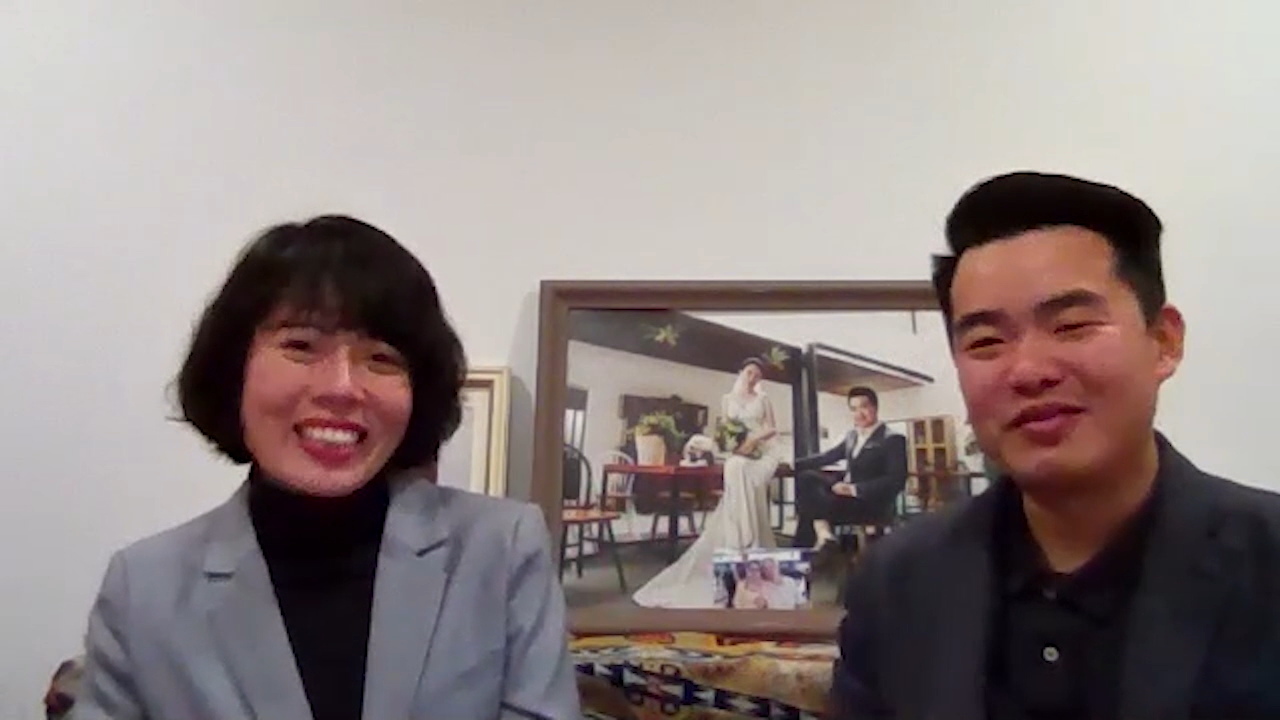
  • Theresa Chuang and Chris Zheng — Love as Harmony

    Theresa Chuang and Chris Zheng — Love as Harmony


    A Narrative of Love conversation hosted by Dr Scherto Gill

    ▶ Watch this conversation on YouTube


    In this distinctive double conversation, Theresa Chuang and Chris Zheng bring perspectives rooted in Taoist philosophy, ecology and social enterprise to explore what love means in a Chinese cultural context — and what East and West might offer one another.

    Chris observes that Chinese culture is fundamentally about harmony: a relational quality that operates between people, between humanity and nature, and between the visible and invisible dimensions of life. Western culture’s strength, by contrast, lies in its emphasis on love between individuals. The invitation is for each tradition to learn from the other: for China to allow more direct, expressive love, and for the West to deepen its understanding of harmony as a form of love that encompasses whole systems.

    Both practitioners are working to bring Taoist principles into mainstream life rather than retreating from society — running social enterprises and NGOs that attempt to embody ecological civilisation in practice, with “head, hand and heart” as their guiding orientation. The conversation reflects on infinite responsibility as an expression of love; on the importance of not mimicking the aggressor in one’s activism; and on the simple, grounding practice of civil diplomacy through designing resilient communities and returning to reverence for the harmony of nature.


    This is one of eleven conversations in the A Narrative of Love series, hosted by Dr Scherto Gill in preparation for the 5th Spirit of Humanity Forum, June 2021. The series was sponsored by the Pureland Foundation and the Guerrand-Hermès Foundation for Peace (GHFP).

  • Dr Joy DeGruy — Radical Love and the Path to Collective Healing

    Dr Joy DeGruy — Radical Love and the Path to Collective Healing


    A Narrative of Love conversation hosted by Dr Scherto Gill

    ▶ Watch this conversation on YouTube


    Dr Joy DeGruy speaks from a place of profound personal and intellectual honesty about what it means to grow up Black in America — proud of one’s heritage and yet daily confronted with the dissonance between the ideals of equality and the lived reality of structural dehumanisation. Her academic work, she explains, did not come from her four degrees; it came from the recognition that she had never been taught about her own people, their contributions or their suffering.

    The conversation traces the concept of Post Traumatic Slave Syndrome — the intergenerational transmission of trauma from centuries of American chattel slavery — and the way unhealed historical wounds become encoded in behaviour, self-perception and community life. Crucially, Dr DeGruy insists that healing is not about guilt: it is about recognition, agency and working together. When people know better, they tend to do better.

    She reflects on the African concept of “I see you” — a gesture of acknowledgement, belonging and love that speaks directly to the wound of invisibility — and on the radical ethics of love she places at the centre of the path to social transformation. Love, she argues, in combination with truth, destroys the lie on which systems of oppression depend.

    As Scherto observes in their exchange, love is a movement, an action, that shortens the distance between people — the relational starting point for healing. And healing, Dr DeGruy is clear, begins with each of us: your scope of power starts with you.


    This is one of eleven conversations in the A Narrative of Love series, hosted by Dr Scherto Gill in preparation for the 5th Spirit of Humanity Forum, June 2021. The series was sponsored by the Pureland Foundation and the Guerrand-Hermès Foundation for Peace (GHFP).

  • Dr Vandana Shiva — Seeds of Love

    Dr Vandana Shiva — Seeds of Love


    A Narrative of Love conversation hosted by Dr Scherto Gill

    ▶ Watch this conversation on YouTube


    Dr Vandana Shiva opens with a striking claim: agriculture is an act of love. From her earliest experience of her father’s nurturing care to her lifetime of work defending seeds, soils and the rights of farming communities, she traces a single thread — that love is not sentiment but relationship, not abstraction but practice rooted in the living world.

    She articulates a vision of love as compassion, as the recognition of interconnectedness that makes exploitation impossible: when there is unconditional trust, there is unconditional love. The problems humanity faces — ecological destruction, corporate monoculture, the erosion of commons — arise, she argues, from blindness, denial and a fear of love; from a manipulated world of domination and control that severs the thread of relationship between human beings and the living systems that sustain them.

    Vandana Shiva calls for spiritually inspired activism that does not mimic the aggression of oppressive systems: non-violent power grows, she insists, while violent systems, being ultimately loveless, cannot endure. She describes economies of love — drawing on Aristotle’s sense of economy as the art of living well — in which the only true measure of wealth is right relationship, care and the recovery of the commons.

    And she closes with a seed: a simple, radical act of love available to anyone. If we can save one seed, she says, it will hold within it the imagination of love.


    This is one of eleven conversations in the A Narrative of Love series, hosted by Dr Scherto Gill in preparation for the 5th Spirit of Humanity Forum, June 2021. The series was sponsored by the Pureland Foundation and the Guerrand-Hermès Foundation for Peace (GHFP).

  • Bob Boisture — Love, Justice and the Flourishing of All

    Bob Boisture — Love, Justice and the Flourishing of All


    A Narrative of Love conversation hosted by Dr Scherto Gill

    ▶ Watch this conversation on YouTube


    Bob Boisture brings the Fetzer Institute’s foundational commitment to love and forgiveness into direct conversation with the questions of governance, democracy and social transformation. He opens by sharing a three-fold definition of love that has shaped his work: love as a spiritual foundation, love as a habit of the heart through which another’s well-being becomes our own, and love as justice in action — a phrase he encounters in Scherto’s framing and immediately embraces.

    He reflects on his own journey as a lawyer who chose non-profit work in order to bring love into institutions — and on the uncomfortable conclusion that follows when you look at every social institution through a lens of love: every system we have is in need of transformation. The conversation addresses the racial reckoning in the United States directly, and Fetzer’s conviction that organisations cannot make a constructive contribution to healing in the outside world until they have done their own inner work first.

    Boisture draws on Martin Luther King’s insight that love without power is anaemic, exploring how the Fetzer approach seeks to mainstream inner work within civil society — building communities of genuine belonging, not merely inclusion within norms developed without those communities’ participation. The beloved community King envisioned, he suggests, is not an aspiration but a practice: an enactment of love through sustained dialogue, listening and the patient work of healing the heart of democracy.


    This is one of eleven conversations in the A Narrative of Love series, hosted by Dr Scherto Gill in preparation for the 5th Spirit of Humanity Forum, June 2021. The series was sponsored by the Pureland Foundation and the Guerrand-Hermès Foundation for Peace (GHFP).

  • Lene Rachel Andersen — Love, Bildung and the Nordic Secret

    Lene Rachel Andersen — Love, Bildung and the Nordic Secret


    A Narrative of Love conversation hosted by Dr Scherto Gill

    ▶ Watch this conversation on YouTube


    Lene Rachel Andersen brings the tradition of Bildung — the European, and particularly Nordic, practice of deep human formation and development — into conversation with love. She tells the largely forgotten story of how the Folk High School movement of the 19th and 20th centuries cultivated inner transformation, self-awareness and self-authority in young people, and how this empowerment from the bottom up was the quiet foundation of the strong democracies and welfare societies of Scandinavia.

    She argues that modern education has made a profound error in stripping beauty, communal singing, meaning-making and spiritual development from the curriculum in pursuit of productivity — producing, she suggests, exactly the angry, frustrated and anxious young people we now see. If we have an educational system so focused on science and technology so people can go out and be producers and consumers, they will lose all the meaning-giving, purpose-giving parts of education.

    The conversation explores what it would mean to recover these dimensions — to lift from the bottom and ensure that every person has access to the skills, understanding and meaning-making that allows them to thrive for themselves and for others.

    Lene’s closing vision is one of narrative renewal: moving from a story of exploitation and extraction to one in which humanity reconnects with the fullness of what it has been and what it might yet become — embracing cultural and biological diversity, and the extraordinary richness of the living world we have inherited.


    This is one of eleven conversations in the A Narrative of Love series, hosted by Dr Scherto Gill in preparation for the 5th Spirit of Humanity Forum, June 2021. The series was sponsored by the Pureland Foundation and the Guerrand-Hermès Foundation for Peace (GHFP).

  • Lord John Alderdice — Love, Peace and the Politics of Healing

    Lord John Alderdice — Love, Peace and the Politics of Healing


    A Narrative of Love conversation hosted by Dr Scherto Gill

    ▶ Watch this conversation on YouTube


    Lord Alderdice draws on his experience as Leader of the Alliance Party of Northern Ireland and his central role in negotiating the 1998 Good Friday Agreement to explore what love actually looks like in political practice. He reflects on a fundamental insight that guided the peace process: that new political structures cannot create better communal relationships; rather, it is only by first addressing the disturbed historical relationships between people and communities that new structures can emerge which genuinely serve them.

    The conversation probes the moral complexity of peacemaking: the sense that reaching agreement may feel like a betrayal of those who suffered, while failing to reach it betrays future generations. Lord Alderdice reflects on how genuine political leadership requires humility, a willingness to engage with everyone as human beings beyond their political positions, and a sense of belonging to a larger community of generations — those who came before and those who will follow.

    He also speaks to the place of silence in public life, recounting how a proposal for two minutes of silence at the opening of the new Northern Ireland Assembly was agreed and continues to this day — a small but significant act of creating space for reflection within institutions built on conflict.

    The conversation closes on the limits of measurement in understanding well-being, and the importance of empathy, imagination and relationship as the deepest resources available to those who govern.


    This is one of eleven conversations in the A Narrative of Love series, hosted by Dr Scherto Gill in preparation for the 5th Spirit of Humanity Forum, June 2021. The series was sponsored by the Pureland Foundation and the Guerrand-Hermès Foundation for Peace (GHFP).

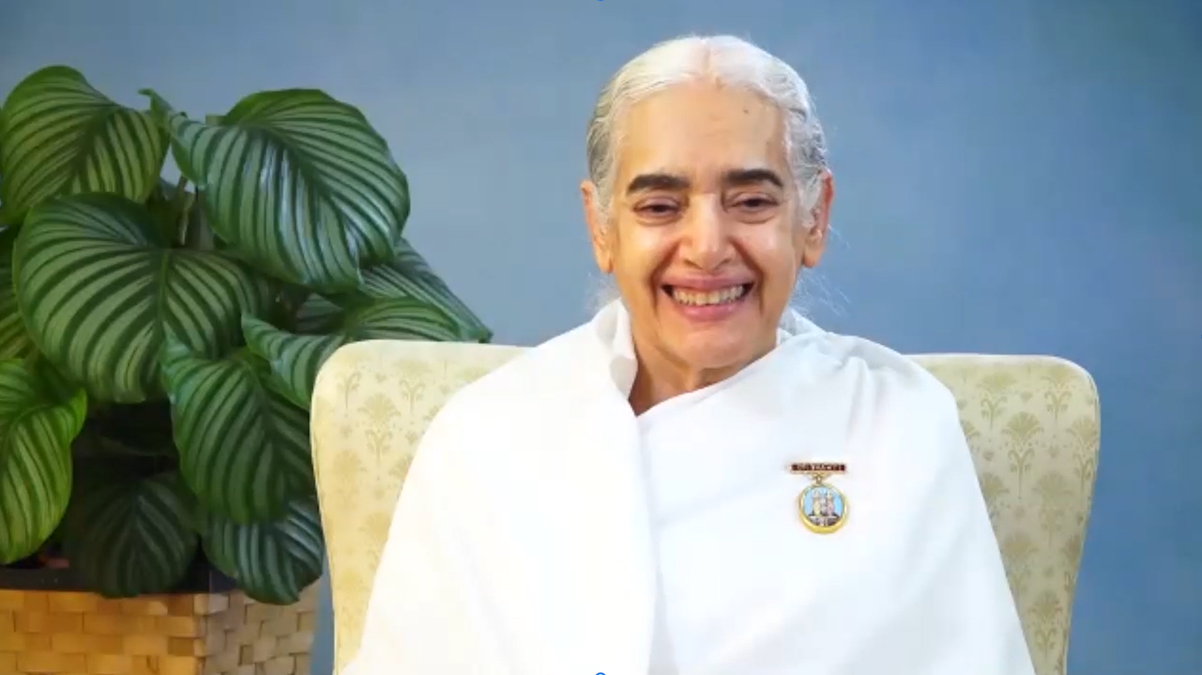
  • BK Sister Jayanti — Love, Spirituality and Inner Transformation

    BK Sister Jayanti — Love, Spirituality and Inner Transformation


    A Narrative of Love conversation hosted by Dr Scherto Gill

    ▶ Watch this conversation on YouTube


    Sister Jayanti Kirpalani explores how love, understood as an inner spiritual reality, might be integrated into everyday life, politics and education. She invites a shift in perspective: it is not the external structures of the world that are ultimately driving events, but the quality of inner being that each of us brings to our lives and work. When that inner being is grounded in love, it changes the atmosphere of any room, negotiation or institution — even when nothing is said directly.

    The conversation moves through questions of how we know when we are in that spiritual flow; how to reconcile the imperative to serve with genuine self-care; how spirituality relates to structural change; and what promise inner transformation holds for the world’s most urgent crises. Sister Jayanti draws on decades of practice in the Brahma Kumaris tradition and her experience working alongside political leaders and at the United Nations, where she has witnessed how even the hardest negotiations shift when individuals bring qualities of stillness and presence.

    Values, she suggests, are caught rather than taught — lived rather than transmitted through instruction. The conversation closes with a guided reflection on love.


    This is one of eleven conversations in the A Narrative of Love series, hosted by Dr Scherto Gill in preparation for the 5th Spirit of Humanity Forum, June 2021. The series was sponsored by the Pureland Foundation and the Guerrand-Hermès Foundation for Peace (GHFP).

  • Rabbi David Geffen — Love and the Loving Classroom

    Rabbi David Geffen — Love and the Loving Classroom


    A Narrative of Love conversation hosted by Dr Scherto Gill

    ▶ Watch this conversation on YouTube


    Rabbi David Geffen is the founder of the Loving Classroom — an initiative rooted in the conviction that love is not merely a worthy aspiration for education but its essential foundation. He opens by reflecting on his own formation: how the Jewish tradition’s emphasis on learning as a sacred act, and on the teacher-student relationship as one of mutual care and responsibility, shaped his understanding of what classrooms can and should be.

    The Loving Classroom begins with a simple premise: that children learn best when they feel genuinely seen, valued and loved. This is not sentimentality but pedagogy — a recognition that the emotional and relational climate of a classroom is as determinative of learning outcomes as any curriculum. Rabbi Geffen draws on decades of experience to show how teachers who lead with love create the conditions for both intellectual and human flourishing.

    The conversation explores what it means to love students across difference — across cultural, religious and socio-economic divides — and how this kind of expansive love is itself a spiritual practice. He reflects on the particular gift of the Jewish tradition’s concept of chesed — lovingkindness — as a daily discipline that can be taught, practised and embodied in institutional life.

    His closing vision is of schools as communities of love: places where every child knows they belong, and where learning is inseparable from becoming more fully human.


    This is one of eleven conversations in the A Narrative of Love series, hosted by Dr Scherto Gill in preparation for the 5th Spirit of Humanity Forum, June 2021. The series was sponsored by the Pureland Foundation and the Guerrand-Hermès Foundation for Peace (GHFP).